Security tool pricing often feels like a guessing game. Per-seat fees appear straightforward. Then come the surprises. Extra charges for container scanning. Additional costs for CI/CD integration. Hidden fees for support.
SonarQube follows a lines-of-code model. The Community Build is free but requires self-hosting. The paid editions start at €30 per month for cloud with up to 1.9M lines of code. Enterprise scales by codebase size, making costs unpredictable for monorepos and legacy code.
The platforms below offer transparent pricing structures. Some charge per active developer. Others use flat monthly rates. A few follow target-based models. Each option helps teams budget accurately without hidden fees or surprise add-ons.
1. Aikido
Aikido uses a flat pricing model that does not scale with headcount or codebase size. The free tier includes two users and ten repositories with full SAST, SCA, secrets detection, and IaC scanning. Basic plan costs €300 per month flat with ten users and 100 repos. Pro is €600 per month.
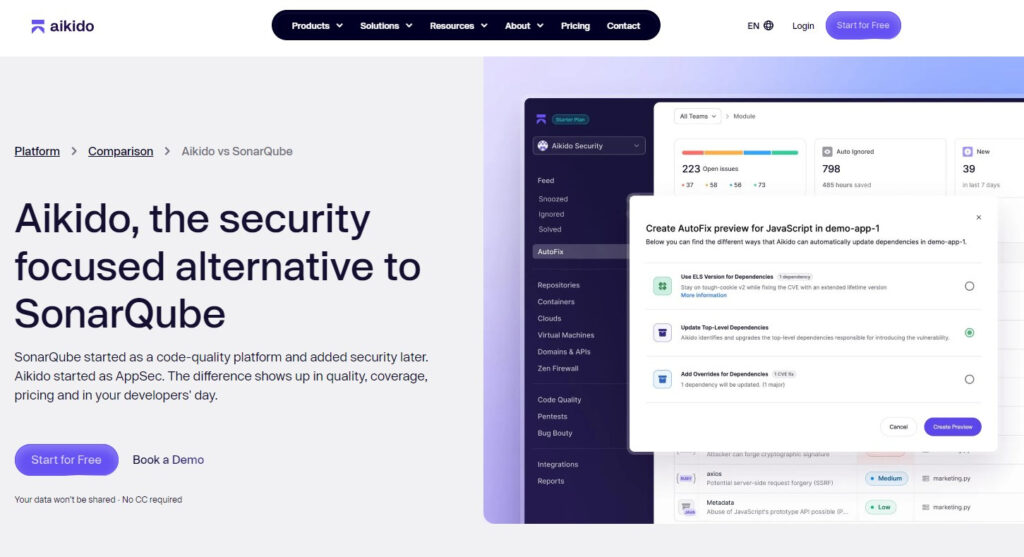
The flat model means no per-seat surprises at renewal. Paid plans include unlimited logins, so teams do not count “contributing developers.” For a small team wanting broad AppSec coverage and predictable billing, Aikido’s approach removes the math of per-developer scaling.
How Aikido’s pricing works:
- Free forever with 2 users, 10 repos, and core security features
- Flat monthly fee covers all modules without per-seat charges
- No credit card required to start
- Student access with a .edu email
This makes Aikido a strong SonarQube alternative for teams that value predictable, all-in-one pricing without hidden costs.
2. Snyk
Snyk offers a free tier for individual developers with unlimited tests on open-source projects and 200 tests per month on private projects. The Team plan starts at $25 per developer per month with a minimum of five developers, capping at ten licenses. Above that, Enterprise pricing is custom.
Snyk charges based on contributing developers who commit code, not total employees. This means non-coding team members do not count toward the bill. The free tier includes SCA, SAST, and container scanning through IDE plugins and CI/CD integration. Team plans bundle unlimited scans and integrations with development tools.
How Snyk’s pricing works:
- Free tier with 200 private tests per month
- Team plan at $25 per developer per month
- Based on contributing developers, not total employees
- Multi-year commitments unlock discounts
Snyk’s per-developer pricing scales predictably as engineering teams grow. The model fits organizations that value transparency and minimal alert noise.
3. JFrog
JFrog offers tiered SaaS pricing based on storage, users, and features. Pro tier starts at $50 per month for 25GB storage with universal artifact management and container registry. Enterprise X starts at $950 per month with high availability, artifact federation, and SSO.
Self-hosted options start at $27,000 per year for Pro X and $51,000 per year for Enterprise X. Advanced Security features add costs based on contributing developers: Enterprise X includes 50 contributing developers, and Enterprise+ includes 200 contributing developers. Additional contributing developers can be purchased separately.
How JFrog’s pricing works:
- Pro SaaS from $50/month with 25GB storage
- Enterprise X from $950/month for larger teams
- Self-hosted starts at $27,000/year
- Advanced Security priced by contributing developers
JFrog’s transparent tiered model helps teams plan costs based on storage needs and security requirements.
4. Opengrep
Opengrep is the most advanced open-source SAST engine available today. The platform was created when Semgrep moved critical features behind a commercial license. Opengrep keeps static analysis open and accessible under LGPL 2.1.
Backed by a consortium of 10+ AppSec organizations, including Aikido, Endor Labs, and Jit, the project ensures long-term maintenance and open governance.
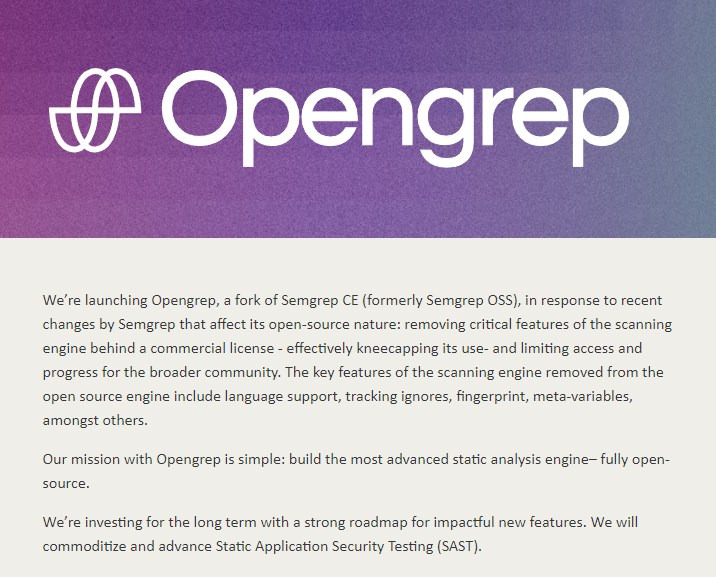
The engine supports over 30 languages, including Apex, Elixir, Visual Basic, and even Brainf*ck. Opengrep has delivered scans 25-74% faster when running full rule sets on large repositories, with taint analysis running up to 2x faster.
Transparent pricing:
- Opengrep is open-source under the LGPL 2.1 license.
- The software costs nothing to download, install, or use.
- There are no contributor limits or user caps.
The platform currently supports over 30 programming languages and is backed by a consortium of 10+ AppSec organizations, including Aikido, Endor Labs, and Jit.
For teams seeking an affordable option among SonarQube alternatives, Opengrep delivers enterprise-grade SAST without the enterprise price tag.
5. Burp Suite Professional
Burp Suite Professional is the industry-standard web application security testing platform from PortSwigger. The platform includes proxy functionality, Repeater for request manipulation, and Intruder for custom attack automation.
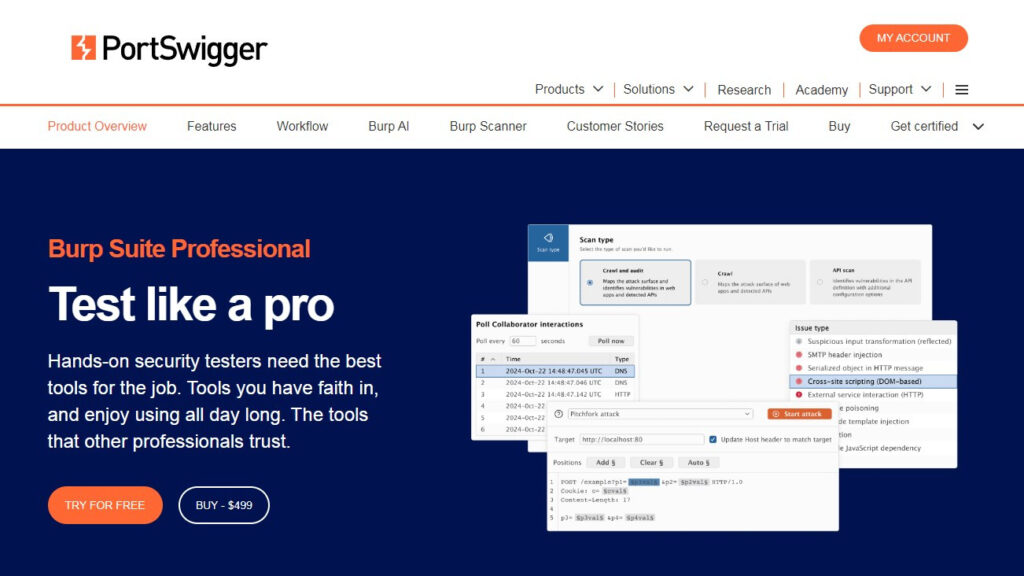
Professional edition adds automated vulnerability scanning, Burp AI features that generate attack ideas, and OAuth2 support for API scanning. Used by penetration testers and security teams worldwide.
Transparent pricing:
- Community Edition is free.
- Professional Edition is $449 per user per year.
- Volume discounts available for teams: 5-10 users typically achieve $380-$420 per user annually.
- Enterprise Edition is custom-priced based on application count and scan frequency.
For organizations comparing SonarQube alternatives for containers and web application testing, Burp Suite’s transparent per-user pricing makes budgeting straightforward.
The Real Cost of Security Tools
Security tool pricing goes beyond the sticker price. Free tiers come with limitations. Per-developer fees hide minimums. Custom pricing requires sales calls. Teams must understand the total cost of ownership.
Per-developer models
Snyk charges $25 per contributing developer per month for the Team plan. Opengrep offers a different approach – completely free with no per-developer fees at all. For teams evaluating which SonarQube alternatives have low noise and predictable costs, the per-developer model provides clear budgeting.
Flat-rate models
Aikido uses flat monthly pricing that does not scale with headcount or codebase size. The €300 per month Basic plan includes ten users and 100 repos. This model removes the per-seat math entirely. Small teams get predictable billing without counting every contributor.
Per-user subscription models
Burp Suite Professional follows a straightforward per-user subscription model at $449 per user per year. This predictable annual cost covers automated scanning, Burp AI features, and OAuth2 support. Volume discounts apply for teams of 5-10 users.
Free and open-source models
Opengrep is completely free under LGPL 2.1. The engine supports over 30 languages with no contributor limits or user caps. Backed by a consortium of 10+ AppSec organizations, this model works for teams of any size.
Self-hosted considerations
JFrog’s self-hosted options start at $27,000 per year. Burp Suite Professional can be self-hosted with an annual subscription. Opengrep runs locally as a self-contained binary with no Python dependencies, eliminating infrastructure costs entirely.
Hidden costs to watch
Per-developer models often require minimums. Snyk’s Team plan requires 5+ developers. Professional services and premium support can add 25-40% to base subscription costs.
How to Choose Based on Pricing Model
The right pricing model depends on team size, growth trajectory, and security requirements.
Small teams (2–10 developers)
Aikido’s free tier covers 2 users and 10 repos at no cost. Burp Suite Community Edition is free for manual testing. Opengrep has no limits whatsoever. Teams should start with free tiers and scale as needed.
Growing teams (10–50 developers)
Aikido’s Basic plan at €300 per month for 10 users provides predictable costs. Snyk’s Team plan at $25 per developer per month requires 5+ developers. Burp Suite Professional at $449 per user per year, fits security testing teams. For teams looking for SonarQube alternatives for cloud and containers, Aikido’s flat rate covers all modules.
Enterprise teams (50+ developers)
Burp Suite Enterprise Edition custom pricing suits large application portfolios. Snyk’s Enterprise plan offers custom pricing for larger teams. JFrog Enterprise X at $950 per month supports larger development organizations.
Teams with complex security requirements
Aikido covers SAST, SCA, DAST, container scanning, and cloud posture management in one flat price. This eliminates the need for separate security tools. For organizations comparing SonarQube alternatives for containers, Aikido’s all-in-one approach reduces tool sprawl.
Budget-conscious teams
Opengrep delivers enterprise-grade SAST at zero cost. Burp Suite Community Edition provides free manual testing tools. Aikido’s free tier covers two users and ten repos. Among affordable options for SonarQube alternatives, these choices provide real security without budget strain.
Final Thoughts
Transparent pricing separates useful security tools from budget traps. Teams need to know exactly what they pay for. Per-developer fees, flat rates, and open-source models each serve different needs.
Aikido offers flat pricing that does not scale with headcount or codebase size. The free tier covers two users and ten repositories. Paid plans start at €300 per month with ten users and 100 repos. This approach removes per-seat surprises, making Aikido a developer-friendly SonarQube alternative for teams that value predictable billing.
Snyk charges $25 per developer per month for the Team plan. Burp Suite Professional costs $449 per user per year. JFrog starts at $50 per month for Pro SaaS. Opengrep is completely free with no licensing costs whatsoever.
Among affordable options in SonarQube alternatives, Aikido’s flat pricing model stands out for small teams that want comprehensive coverage without per-seat math. Snyk offers accessible per-developer pricing for growing teams. Burp Suite Professional provides predictable annual costs for security testing. Opengrep delivers enterprise-grade SAST at zero cost.
The best choice depends on team size and security requirements. For all-in-one coverage with predictable costs, Aikido delivers the most value.